
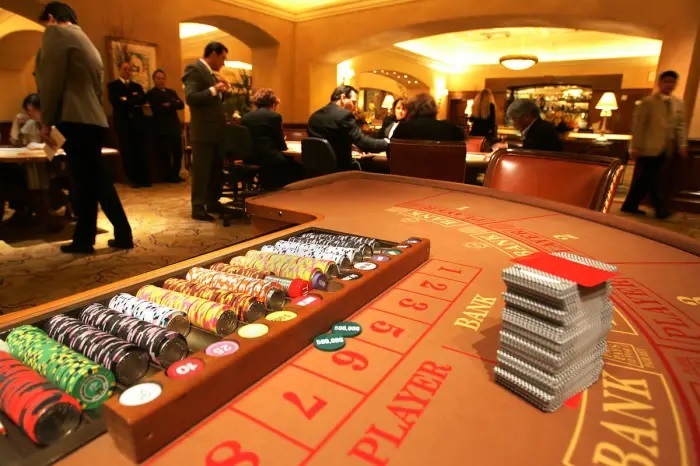

Walk into any legendary casino floor, from the opulent historical halls of Monte Carlo to the towering architectural marvels of the modern Las Vegas Strip, and you will inevitably notice a distinct spatial hierarchy. While the flashing lights, high-energy clamor, and bustling crowds dominate the slot machine corridors and blackjack pits, there is always a quieter, more exclusive enclave. This is the high-limit sanctuary, a realm defined by thick velvet ropes, hushed tones, bespoke woodwork, and tuxedo-clad croupiers. At the very center of this elite ecosystem sits baccarat.
Today, baccarat is universally recognized as the quintessential symbol of high-stakes gambling and refined luxury culture. Yet, its journey from a modest medieval Italian card game to the favorite pastime of royalty, cinematic secret agents, and billionaire moguls is a fascinating study in social status, psychology, and clever casino architecture. Understanding how baccarat claimed its throne reveals a great deal about how culture and commerce intertwine within the world of high-end entertainment.
From Medieval Italian Roots to Aristocratic European Salons
The origins of baccarat trace back to fifteenth-century Italy, where a gambler named Felix Falguiere invented a game using tarot cards, naming it after the Italian word for zero because all the face cards and tens were worth zero points. Initially, the game carried scandalous undertones; according to historical lore, its earliest iterations were based on an ancient Etruscan ritual where a nine-sided die determined the fate of a virgin priestess. If she rolled an eight or a nine, she became a priestess; a six or seven meant she was spared but lost her religious standing; and any lower number meant she was cast into the sea.
Fortunately, the game quickly shed its darker mythological baggage as it migrated across the border into France during the late fifteenth century. French nobility embraced the game with fanatical devotion. During the reign of King Charles VIII and throughout the subsequent centuries, variants like Chemin de Fer and Baccarat Banque became the ultimate social currency among the French aristocracy. Nobles would gather in private Parisian salons and royal chateaux, playing for staggering fortunes behind closed doors. It was during this royal era that baccarat forged its permanent association with aristocracy, exclusivity, and wealth. The game was not designed for the masses; it was an exclusive ritual reserved for those who belonged to the highest strata of society.
The Architecture of Exclusivity: How Casinos Adopted the Game
When legal gambling houses began to formalize in Europe and later expand into the desert oasis of Las Vegas, casino operators recognized the immense psychological value of baccarat’s aristocratic reputation. They did not just add baccarat tables to the floor; they built entirely separate universes around them.
In the mid-twentieth century, legendary Las Vegas visionary Benny Binion introduced baccarat to the American market at the Horseshoe Club, hoping to attract international high rollers. However, it was truly popularized on a grand scale when hotelier Jay Sarno designed Caesars Palace in nineteen sixty-six. Sarno understood that elite gamblers did not want to rub shoulders with casual tourists playing nickel slots. They wanted privacy, deference, and an atmosphere that reflected their immense financial status.
The High-Limit Saloon Concept
Casinos responded by carving out private, velvet-draped rooms away from the noise of the main gaming floor. These high-limit baccarat salons were engineered using sophisticated spatial psychology. Dimmed crystal chandeliers, plush carpeting that swallowed the sound of footsteps, and private cashier cages created a serene, almost sacred environment. By physically separating baccarat from the rest of the casino, operators transformed playing the game into an elite status symbol. Gaining entry to the private baccarat room signaled to everyone in the building that you belonged to an exclusive club of financial heavyweights.
The Ritual of the Squeeze and Cinematic Mystique
Unlike blackjack, which requires split-second mathematical decisions, or roulette, which is entirely dictated by chance, traditional baccarat is a game of pure suspense. Players make their wager on either the Player or the Banker, and the cards dictate the outcome according to strict, unchangeable drawing rules. Because the strategy is entirely predetermined, the game derives its emotional power from the ritual of revealing the cards.
This brings us to the legendary squeeze, a theatrical practice popularized in Asian VIP rooms and eagerly adopted globally. In games where players are permitted to handle the cards, the bettor who wagered the highest amount on a hand gets the ultimate privilege of looking at the cards. Instead of simply flipping them over, the player slowly, agonizingly bends the edges of the card, using their thumbs to shield the pips from the table, trying to divine whether the corner reveals the edge of a face card or the pip of an eight. This slow-motion reveal turns a simple two-minute card draw into high-stakes theater, captivating the entire room in breathless silence.
Pop Culture and the James Bond Effect
You cannot discuss baccarat’s cultural dominance without acknowledging its massive footprint in popular culture. In nineteen fifty-three, Ian Fleming published Casino Royale, the very first novel featuring his iconic British secret agent, James Bond. In the book, Bond does not play Texas Hold ’em or blackjack; he sits down at the baccarat table to duel the villain Le Chiffre in a high-stakes game of wits.
When the literary classic was adapted into blockbuster films, the baccarat table became the ultimate backdrop for suave sophistication, tailored tuxedos, and cool-under-pressure masculinity. Every ambitious traveler who walked onto a casino floor wanted to step into James Bond’s shoes, and playing baccarat was the most direct way to replicate that cinematic mystique.
The Modern Global Renaissance
In recent decades, baccarat has undergone a massive geographic and demographic shift. While it remains deeply rooted in the luxury culture of European salons and Las Vegas high-limit rooms, its center of gravity expanded dramatically with the explosive rise of Macau as the undisputed gambling capital of the world.
In Asian gaming culture, baccarat struck a deep chord. Its association with high stakes, combined with traditions of superstition, lucky charms, and the dramatic card squeeze, made it an absolute phenomenon. Today, baccarat generates the vast majority of gaming revenue in major international markets, dwarfing the combined totals of traditional table games like craps and roulette.
Despite this massive commercial expansion, the game has managed to protect its elite branding. Even as digital casinos and online platforms offer computerized versions of baccarat to everyday players at home, the physical game retains its aura of prestige. High-end resorts continue to invest millions of dollars into designing breathtaking, ultra-private baccarat salons outfitted with Italian leather seating, private dining options, and dedicated VIP hosts.
Baccarat’s enduring place at the pinnacle of luxury casino culture is not an accident of history. It is the result of centuries of careful curation, shifting from the private salons of French royalty to the cinematic fantasies of secret agents and the opulent VIP floors of modern global resorts. By maintaining an atmosphere of mystery, exclusivity, and theatrical suspense, baccarat has proven that true elegance never goes out of style.
