
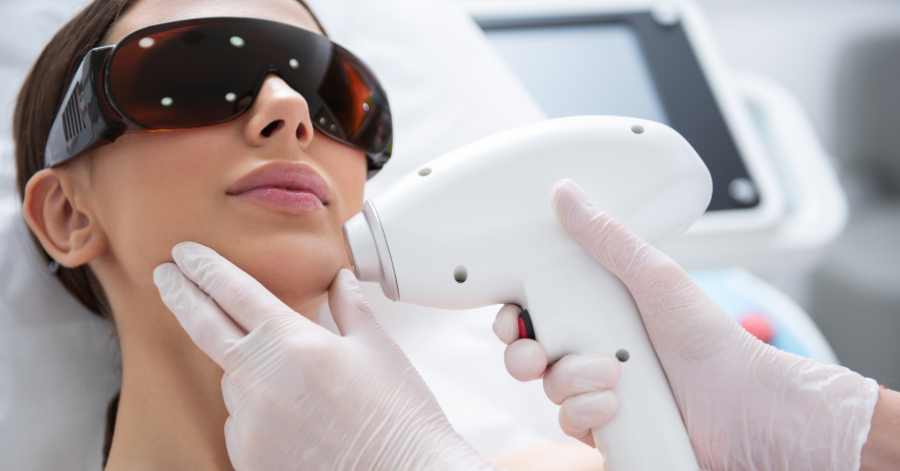
4 Tailored Laser Approaches for Delicate Skin Types Advised by a Laser Hair Removal Specialist

Laser treatments have become a standard option for addressing skin concerns in urban settings like London, where access to advanced dermatological services is readily available. For individuals with delicate skin—characterised by sensitivity, thin texture, or conditions such as rosacea—selecting the appropriate method is essential to achieve effective results without irritation. This article examines four specialised laser approaches designed for these skin types, drawing on established practices to ensure safety and efficacy.
A specialist at Medspa emphasises the importance of preliminary assessments before commencing any laser procedure: “Patients with delicate skin benefit most from a thorough consultation to evaluate tolerance levels and customise settings accordingly, minimising risks such as redness or hyperpigmentation.” For those exploring options in laser hair removal London, the clinic recommends starting with a patch test to confirm suitability.
Delicate Skin and Laser Compatibility
Delicate skin refers to dermal layers that react strongly to external stimuli, often exhibiting symptoms like easy flushing, dryness, or prolonged recovery after minor abrasions. In clinical terms, this encompasses Fitzpatrick skin types I to III, which are lighter and more prone to damage from aggressive therapies. Laser technology operates by emitting concentrated light beams absorbed by specific chromophores in the skin, such as melanin or haemoglobin, to target issues like pigmentation, vascular lesions, or unwanted hair growth.
The appeal of lasers lies in their precision, allowing for controlled energy delivery that spares surrounding tissues. However, for sensitive complexions, standard high-intensity lasers can provoke adverse effects, including thermal injury or inflammation. Research from the British Journal of Dermatology indicates that up to 20% of patients with sensitive skin experience post-treatment erythema if parameters are not adjusted. Thus, tailored approaches incorporate lower fluences, extended pulse durations, and cooling mechanisms to protect the epidermis.
In London, where environmental factors such as pollution and variable weather exacerbate skin sensitivity, clinics prioritise protocols aligned with guidelines from the British Association of Dermatologists. These ensure that treatments are not only effective but also compliant with stringent safety standards. Patients are advised to maintain a baseline skincare routine involving gentle cleansers and broad-spectrum sunscreens to optimise outcomes.
Approach 1: Pulsed Dye Laser for Vascular Concerns
The pulsed dye laser (PDL) stands as a cornerstone treatment for vascular irregularities common in delicate skin, such as telangiectasias or diffuse redness associated with rosacea. Operating at a wavelength of 585-595 nm, PDL targets oxyhaemoglobin in blood vessels, causing selective thermocoagulation without penetrating deeply into the dermis. This shallow absorption profile—typically 1-2 mm—makes it ideal for thin, reactive skin layers.
Clinical studies, including a 2022 meta-analysis in Lasers in Surgery and Medicine, report clearance rates of 70-90% after three to five sessions, with minimal downtime. For instance, patients often notice a temporary purplish bruising that resolves within 7-10 days, far less disruptive than alternatives like intense pulsed light (IPL), which scatters energy and risks uneven heating.
In practice, sessions last 15-30 minutes, depending on the treated area, such as the cheeks or nose. Cooling sprays or dynamic cooling devices are integrated to soothe the skin during pulses, reducing discomfort to a mild stinging sensation. Post-treatment care involves avoiding heat sources and applying soothing topicals like aloe vera or centella asiatica extracts.
London-based dermatologists frequently recommend PDL for early-stage rosacea management, where traditional topicals fall short. A cohort study from Guy’s and St Thomas’ NHS Foundation Trust demonstrated sustained improvements in quality-of-life scores for 85% of participants six months post-treatment. This approach’s specificity minimises collateral damage, preserving the skin’s barrier function—a critical consideration for those with inherent fragility.
Furthermore, advancements in PDL technology, such as cascaded pulse designs, allow for finer adjustments in energy delivery. These modifications enable practitioners to address finer vessels near the surface, common in fair, delicate complexions. Patients should expect an initial consultation involving vascular mapping via dermoscopy to delineate treatment zones precisely.
Approach 2: Fractional Non-Ablative Laser for Texture Refinement
Fractional non-ablative lasers, exemplified by devices like the Fraxel Dual, create microthermal zones within the skin to stimulate collagen remodelling without removing the surface layer. This method suits delicate skin by promoting renewal from within, targeting concerns like fine lines, enlarged pores, or mild scarring while leaving the stratum corneum intact.
The 1550 nm wavelength penetrates to 1.5 mm, fractionating the beam into thousands of microscopic columns that spare 70-95% of the tissue per session. According to a 2023 review in the Journal of Cosmetic Dermatology, this results in 40-50% improvement in texture after four treatments spaced four weeks apart, with side effects limited to transient erythema resolving in 24-48 hours.
For sensitive individuals, the non-ablative nature avoids the peeling and crusting seen in ablative counterparts, making it a preferable choice in London’s fast-paced environment where minimal recovery is valued. Sessions typically span 20-40 minutes, with built-in cooling to maintain epidermal temperatures below 45°C, preventing burns.
Evidence from a multicentre trial involving 200 patients with Fitzpatrick types I-II showed no instances of post-inflammatory hyperpigmentation (PIH), a common risk in delicate skin. Instead, neocollagenesis peaks at three months, yielding firmer, more even-toned skin. Complementary measures, such as pre-treatment with barrier-repair creams containing ceramides, enhance tolerance and accelerate healing.
In urban clinics, this approach is often paired with adjunctive therapies like LED photomodulation to further calm inflammation. Long-term data suggests durability, with 60% of benefits persisting beyond a year, underscoring its role in preventive dermatology for those prone to photoageing.
Approach 3: Q-Switched Nd:YAG Laser for Pigmentation Management
Hyperpigmentation, including solar lentigines or melasma, poses a particular challenge for delicate skin, as aggressive peels can exacerbate sensitivity. The Q-switched neodymium-doped yttrium aluminium garnet (Nd:YAG) laser, at 1064 nm, offers a photoacoustic approach that shatters melanin clusters via shockwaves rather than heat, reducing thermal spread.
This nanosecond-pulsed technology disperses pigment particles for macrophage clearance, achieving 60-80% fading in 3-6 sessions, per findings from Dermatologic Surgery (2021). The longer wavelength bypasses epidermal melanin, minimising PIH risk in lighter tones—a boon for rosacea-prone or atopic individuals.
Treatment protocols involve low fluences (2-4 J/cm²) and spot sizes of 3-6 mm, with intervals of 4-6 weeks to allow clearance. Discomfort is akin to a rubber band snap, mitigated by topical anaesthetics or chilled gels. Post-procedure, broad-spectrum SPF 50+ is non-negotiable to prevent rebound pigmentation.
London’s multicultural demographic benefits from this versatility, as adjustable parameters accommodate subtle variations in sensitivity. A study from the British Skin Foundation highlighted its efficacy in urban cohorts exposed to higher UV indices, with 75% satisfaction rates. Integration with tyrosinase inhibitors like hydroquinone pre- and post-treatment optimises results, though low-dose formulations are preferred for delicate types to avoid irritation.
Emerging protocols combine Q-switched with picosecond variants for enhanced fragmentation, further tailoring to individual needs. This evolution reflects ongoing refinements in laser dermatology, ensuring accessibility without compromise.
Approach 4: Alexandrite Laser for Hair Reduction in Sensitive Areas
For unwanted hair in areas like the upper lip or bikini line, where skin is inherently thinner, the Alexandrite laser (755 nm) provides efficient reduction while respecting delicacy. Its melanin-specific absorption excels in lighter skin tones, achieving 70-90% permanent hair loss after 6-8 sessions, as evidenced by a 2024 Lasers in Medical Science review.
Shorter pulses (3 ms) and sapphire cooling tips prevent overheating, limiting reactions to mild folliculitis resolvable in days. In the context of laser hair removal London, this method is favoured for its speed—full legs in under 30 minutes—and suitability for finer hairs.
Guidelines from the European Society for Laser Dermatology advocate starting with test patches to gauge response, essential for those with vascular undertones. Cumulative data shows reduced ingrown hairs by 50% compared to electrolysis, appealing to active lifestyles.
Sessions are scheduled every 4-6 weeks during anagen phases, with maintenance yearly. Affordable packages in central clinics make it viable, though emphasis remains on technician expertise.
Comparative Insights and Patient Selection
Selecting among these approaches hinges on individual diagnostics. PDL excels for redness, fractional for rejuvenation, Q-switched for spots, and Alexandrite for depilation. A comparative table from the Journal of the European Academy of Dermatology illustrates:
Approach |
Wavelength (nm) |
Depth (mm) |
Sessions |
Downtime |
Efficacy (%) |
PDL |
585-595 |
1-2 |
3-5 |
7-10 days |
70-90 |
Fractional |
1550 |
1.5 |
4 |
1-2 days |
40-50 |
Q-Switched |
1064 |
0.5-1 |
3-6 |
<1 day |
60-80 |
Alexandrite |
755 |
2-3 |
6-8 |
1-3 days |
70-90 |
Multimodal strategies, combining two approaches, yield synergistic effects; for example, PDL followed by fractional for comprehensive rosacea control.
Practical Considerations in London Clinics
Accessing these treatments in London involves choosing facilities with CQC registration and advanced equipment. Consultation fees range £50-£150, with packages from £200 per session. Travel via Tube facilitates visits to hubs like Harley Street.
Pre-treatment avoidance of retinoids and sun exposure is standard. Costs vary: PDL £250-400 per face, fractional £300-500. Insurance rarely covers cosmetic uses, but financing options exist.
Advancements and Future Directions
Picosecond lasers and AI-driven parameter optimisation promise greater precision. Trials in The Lancet Dermatology (2025) explore hybrid devices for simultaneous vascular and pigment targeting.
Sustainability efforts include energy-efficient systems, aligning with London’s green initiatives.
Conclusion
These four laser approaches offer reliable solutions for delicate skin, balancing efficacy with gentleness. Informed choices, guided by professionals, ensure optimal results. For personalised advice, consulting a dermatologist remains paramount.

Comments are closed.