
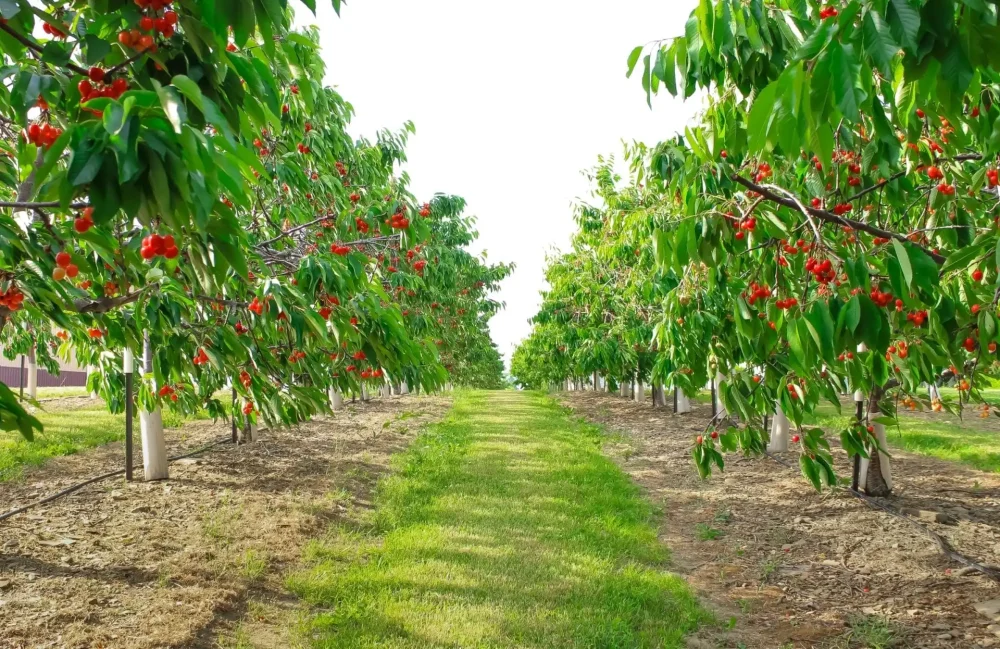

Effective backyard orchard layout planning maximises yield while accommodating typical constraints such as limited plot sizes and variable weather conditions. This article outlines seven distinct approaches to orchard design, each tailored to different garden configurations and objectives. Key considerations include soil type, exposure to sunlight, and pollination requirements, which influence tree health and productivity.
The fruit trees experts at www.fruit-trees.com advises that pollination dynamics should inform layout decisions, particularly in compact gardens where cross-pollination may be necessary for optimal fruit set. They emphasise selecting compatible varieties and maintaining adequate spacing, as detailed in their fruit tree planting tips.
When planning to buy fruit trees, prioritise those grafted onto rootstocks suitable for UK soils, ensuring resilience against common issues like waterlogging.
Traditional Row Planting
Traditional row planting involves arranging fruit trees in straight lines, typically spaced to allow machinery access or straightforward maintenance. This method suits larger gardens where uniformity aids in tasks such as mowing or spraying. For instance, apple trees, a staple in British orchards, can be positioned at intervals of 4 to 6 metres, depending on the rootstock. Semi-dwarf varieties, such as those on M26 rootstock, provide a balance between size and yield, reaching heights of around 3 metres.
To implement this layout, begin by assessing the site’s orientation. South-facing rows maximise sunlight exposure, crucial for ripening fruits in the UK’s temperate climate. Soil preparation entails incorporating organic matter to improve drainage, as heavy clay soils prevalent in many regions can hinder root development. Staking young trees prevents wind damage, a common concern in exposed areas.
Pros of this approach include efficient harvesting and pest monitoring, as the linear arrangement facilitates walking between rows. However, it requires more space than alternative designs, potentially limiting its use in suburban plots. In practice, combining apples with plums or pears in alternating rows enhances biodiversity and reduces disease risk through varied planting. Over time, this layout evolves into a structured grove, providing shade and habitat for wildlife while yielding consistent crops. For those expanding their collection, sourcing additional specimens from established suppliers ensures quality, though one should avoid overplanting to maintain air flow.
Historical precedents in British agriculture demonstrate the efficacy of row planting, with commercial orchards often adopting this for scalability. Adapting it to backyards involves scaling down; for example, a 10-metre row might accommodate three to four trees. Maintenance involves annual pruning to an open-centre shape, promoting light penetration and fruit quality. Watering during dry spells, particularly in southern England, supports establishment. Overall, this layout delivers reliability for gardeners seeking a conventional yet productive setup.
Espalier Training Against Walls
Espalier training positions fruit trees flat against walls or fences, creating a two-dimensional structure that saves space and adds aesthetic value. This technique, rooted in European horticulture, is ideal for urban gardens where vertical space is abundant. Apple and pear trees respond well to espalier, with varieties like ‘Cox’s Orange Pippin’ or ‘Conference’ pear thriving when trained into tiers or fans.
Implementation requires installing horizontal wires at 45-centimetre intervals, starting 30 centimetres from the ground. Young trees are tied to these supports, with branches pruned to encourage lateral growth. This process demands patience, as full formation may take three to five years. In British conditions, south- or west-facing walls provide warmth, extending the growing season and protecting blossoms from late frosts.
Advantages include improved air circulation, reducing fungal infections like apple scab, and easier fruit picking at eye level. The design also serves as a privacy screen or windbreak. Challenges arise from the need for regular pruning—typically twice yearly—to maintain shape. Soil at wall bases can be dry, necessitating mulching and irrigation.
Incorporating espalier into a backyard enhances architectural integration, blending horticulture with built elements. For variety, combine with climbing plants, though ensure competition for nutrients is minimal. When selecting trees for this method, opt for those on dwarfing rootstocks to control vigour. This layout exemplifies efficient use of constrained areas, yielding substantial harvests from minimal footprints.
High-Density Dwarf Tree Clusters
High-density planting clusters dwarf fruit trees closely together, maximising output in small spaces. This modern approach, inspired by commercial techniques, uses rootstocks like M9 for apples, limiting height to 2-3 metres. Groups of four to six trees form compact units, spaced 1-2 metres apart within clusters and 3-4 metres between groups.
Planning begins with site selection, favouring well-drained, fertile soil to support intensive growth. In the UK, where gardens average 100 square metres, this layout fits neatly into corners or borders. Pollination is enhanced by proximity, but include compatible varieties—such as early and late-flowering apples—to ensure cross-fertilisation.
Benefits encompass higher yields per square metre and simplified protection from birds or frost using netting over clusters. Maintenance involves vigilant pruning to prevent overcrowding, typically employing slender spindle forms. Water and nutrient demands are elevated, requiring drip irrigation and balanced fertilisers.
This design suits busy gardeners, as clusters facilitate focused care. For example, a cluster might include apples, cherries, and plums for sequential harvesting. Potential drawbacks include increased disease susceptibility if ventilation is poor, mitigated by open pruning. Sourcing dwarf trees from nurseries ensures vigour control. Overall, high-density clusters represent an innovative solution for productive, space-efficient orchards.
Hedgerow Orchards
Hedgerow layouts arrange fruit trees in continuous lines, mimicking natural boundaries while providing harvests. This method integrates well with British countryside aesthetics, using species like damsons or crab apples for dense, informal hedges. Trees are planted 1-2 metres apart, trained to intermingle for a cohesive barrier.
Preparation involves trenching to improve root establishment, incorporating compost for nutrition. In windy regions, this layout offers shelter, protecting other garden areas. Pruning maintains height at 2-4 metres, focusing on removing crossing branches to promote fruiting wood.
Advantages include wildlife support, as hedges attract pollinators and birds, enhancing ecosystem balance. Yields are moderate but consistent, with easy access for picking. Challenges encompass competition for resources, addressed by thinning and feeding.
Adapting to backyards, hedgerows can define zones, separating vegetable patches from lawns. Varieties suited to hedging, such as perry pears, add diversity. When expanding, buy fruit trees that tolerate close planting. This approach fosters sustainability, blending productivity with environmental benefits.
Container-Based Layouts
Container orchards utilise pots for flexibility, ideal for patios or rented properties. Dwarf or patio varieties of fruit trees, like columnar apples, thrive in large containers of 40-60 litres, filled with loam-based compost.
Positioning exploits microclimates, moving pots to sunny spots or shelter during harsh weather. In the UK, this mitigates frost risks by relocating indoors temporarily. Watering is critical, as containers dry quickly, necessitating regular checks.
Pros include portability and soil control, avoiding poor native conditions. Aesthetic appeal arises from arranged groupings, enhancing hardscaped areas. Limitations involve root restriction, requiring repotting every few years.
This layout accommodates urban dwellers, yielding fruits without permanent alterations. For success, select self-fertile varieties to minimise pollination issues. Maintenance encompasses winter protection with fleece. Container designs offer versatility for evolving garden needs.
Intercropped Orchards
Intercropping integrates fruit trees with vegetables or herbs, optimising land use through companion planting. Trees provide shade for understory crops, while ground covers suppress weeds. In British gardens, apples over lettuces or strawberries exemplify this synergy.
Design starts with spacing trees 3-5 metres apart, planting companions in between. Soil management ensures nutrients suffice for all, using rotations to prevent depletion.
Benefits include pest deterrence, as diverse plantings confuse insects, and improved soil health via nitrogen-fixers like clover. Yields diversify, offering year-round produce.
Challenges involve competition, mitigated by selecting shallow-rooted undercrops. This method aligns with organic principles, reducing chemical inputs. When introducing new elements, buy fruit trees compatible with companions. Intercropping enhances efficiency and resilience.
Permaculture-Inspired Designs
Permaculture layouts mimic natural ecosystems, grouping fruit trees in guilds with supportive plants. A central tree, like an apple, surrounds with berries, herbs, and groundcovers for mutual benefits.
Implementation requires observing site patterns, layering plants vertically for full utilisation. In the UK, this fosters biodiversity, aiding against climate variability.
Advantages encompass low maintenance once established, with natural mulching and pest control. Sustainability is key, recycling resources on-site.
Drawbacks include initial complexity in design. Guilds evolve, providing habitats and harvests. For starting, select multifunctional species. This holistic approach yields long-term rewards.
In summary, these layouts offer adaptable options for British gardeners. Careful selection and maintenance ensure success, contributing to self-sufficiency and garden enjoyment. With proper planning, a backyard orchard becomes a valuable asset.

Comments are closed.